China Top 10 Residential Windows Manufacturers?
Choosing residential windows in China requires more than comparing catalog photos. A polished showroom can hide differences in thermal breaks, glass composition, hardware quality, and installation support. This guide introduces ten manufacturers often considered by international buyers, developers, and renovation professionals. It does not treat “top” as a permanent ranking. Market capacity, product lines, certifications, and service performance can change. That limitation matters.
The selection framework combines practical experience with verifiable evidence. We examine manufacturing scale, project history, material consistency, testing procedures, export readiness, and after-sales communication. We also consider window types, including uPVC, aluminum, wood, and thermally broken systems. Details matter. A strong frame means little if seals shrink, drainage fails, or delivery packaging arrives damaged. Reliable suppliers should explain U-values, air leakage, water tightness, wind resistance, and applicable standards clearly. Buyers should request current test reports, sample sections, warranty terms, and factory videos or visits. Independent verification remains wise.
The featured companies serve different needs, from apartment developments to custom villas. Some may excel in large-volume aluminum systems, while others focus on refined finishes or energy-saving glass. Their strengths are not interchangeable. Prices also vary with glazing, profiles, hardware, colors, screens, and installation conditions. We highlight useful distinctions rather than promising one universal winner. Please read each profile critically. A supplier that looks ideal online may not fit your climate, building code, or project schedule. Ask precise questions. Compare delivered performance, not just quoted price. In the end, this overview is a starting point, not a substitute for due diligence.
Definition and Scope of Residential Window Manufacturers in China
A residential window manufacturer is a business that develops and produces window units for houses and apartments. Its work may cover frame design, glass selection, seals, hardware, fabrication, and quality checks. That distinction matters. A distributor mainly sells finished products, while an installer fits them on site; some companies do both, so the boundary can blur.
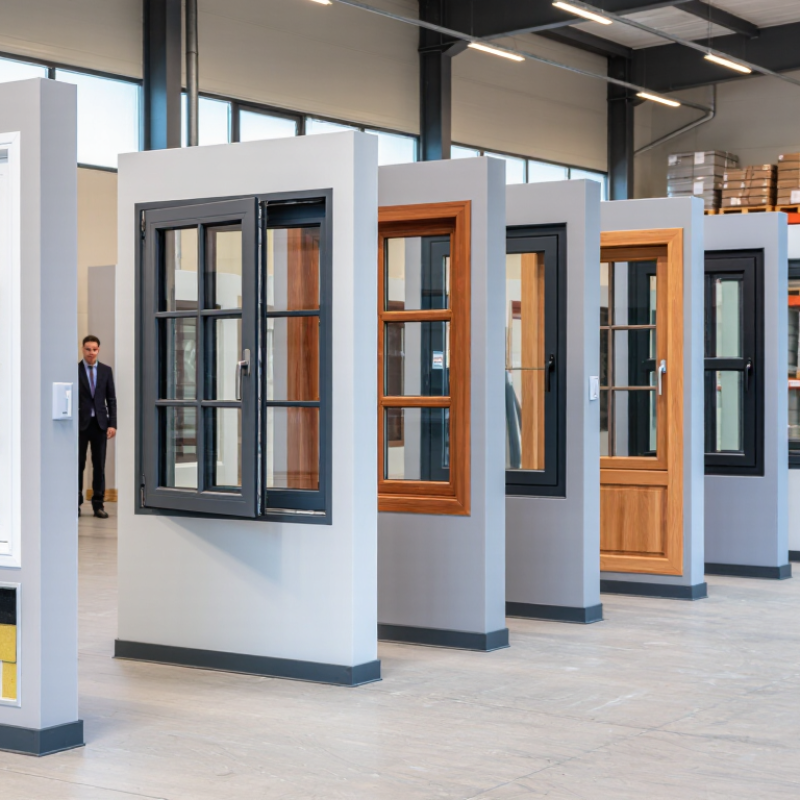
In China, manufacturers serve varied projects, from compact urban apartments to homes in colder northern regions. Their products may include sliding, casement, and fixed windows made with aluminum, uPVC, timber, or combined materials. The scope also includes replacement windows and custom sizes. A frame sample, glass specification, and opening detail often reveal more than a product label.
Performance depends on the complete assembly, not just the glass or frame. Buyers and project teams typically review dimensions, air and water resistance, thermal performance, hardware durability, and relevant test records. Local climate and building requirements affect these choices. Details count. Yet specifications can look convincing on paper and still leave questions about installation tolerances or long-term maintenance. A careful definition of the manufacturer’s role helps clarify who designs, makes, tests, and supports each window system.
This scope checklist covers product families and business activities commonly used to define residential window manufacturers. It is a classification guide, not a market-share chart or a company ranking.
Key Criteria for Ranking China’s Top Residential Window Manufacturers
China Top 10 Residential Windows Manufacturers?
Key Criteria for Ranking China’s Top Residential Window Manufacturers
A useful ranking should compare measurable performance, not polished catalog photos. Check frame materials, glass options, air and water resistance, wind-load ratings, and thermal performance. Ask whether test reports identify the exact window system, dimensions, and hardware tested. Details matter. A result from one configuration may not apply to every model. Manufacturing consistency also counts: inspect sample corner joints, drainage paths, seals, and surface finishes. Request production records or quality-control procedures, where available. Installation guidance and after-sales support deserve attention because even a well-made window can leak when fitted poorly.
Tips: Compare like with like. Use the same opening size, glass build-up, and performance targets when reviewing quotations. Ask for written evidence, not verbal assurances.
Rankings should also consider project experience, delivery reliability, customization capacity, and clarity of warranty terms. Look for documented projects in climates similar to yours, then ask how issues were handled. Be cautious when figures lack test methods or independent verification. No score is perfect. Weighting factors can favor large factories over smaller specialists, and available evidence may be uneven. A practical shortlist should explain its criteria and note what remains unverified. The strongest choice is not always the one with the lowest price or the longest feature list.
Profiles of the Top 10 Chinese Residential Window Manufacturers
Profiles of China’s leading residential window manufacturers are most useful when they explain capabilities, not just factory size. Across ten makers, compare frame materials, glass options, hardware, and customization. A profile should also describe where products are made and how quality checks are handled. Those details help homeowners connect a window’s specifications with daily needs, such as reducing street noise or keeping a bedroom comfortable in winter.
Look closely at installation support and after-sales service. Ask whether measurements are checked before production, and how the company manages damaged glass or fitting issues. A showroom sample can reveal how smoothly a sash opens and whether seals sit evenly around the frame. Still, a polished sample is not proof of consistent work. A ranking can miss regional service differences, too. That deserves a second look.
Tips: Request written specifications for glass thickness, frame finish, and hardware. Compare the same window size across quotations, then confirm what installation includes. Keep the questions simple. A short site visit may tell you more than a glossy catalogue.
China Top 10 Residential Windows Manufacturers? - Profiles of the Top 10 Chinese Residential Window Manufacturers
Data note: Company names and brands are intentionally omitted. The numbered rows are anonymous profile slots, not a verified ranking. Company-specific details are marked as unverified rather than invented; confirm them directly with manufacturers before making purchasing decisions.
| Profile |
Residential Window Products |
Frame Materials |
Manufacturing Capacity |
Performance Information |
Certifications and Testing |
Export Markets |
Verification Status |
| Manufacturer 1 | Not independently verified | Not independently verified | Not publicly verified | Project-specific test data not verified | Not independently verified | Not independently verified | Company identity withheld; ranking unverified |
| Manufacturer 2 | Not independently verified | Not independently verified | Not publicly verified | Project-specific test data not verified | Not independently verified | Not independently verified | Company identity withheld; ranking unverified |
| Manufacturer 3 | Not independently verified | Not independently verified | Not publicly verified | Project-specific test data not verified | Not independently verified | Not independently verified | Company identity withheld; ranking unverified |
| Manufacturer 4 | Not independently verified | Not independently verified | Not publicly verified | Project-specific test data not verified | Not independently verified | Not independently verified | Company identity withheld; ranking unverified |
| Manufacturer 5 | Not independently verified | Not independently verified | Not publicly verified | Project-specific test data not verified | Not independently verified | Not independently verified | Company identity withheld; ranking unverified |
| Manufacturer 6 | Not independently verified | Not independently verified | Not publicly verified | Project-specific test data not verified | Not independently verified | Not independently verified | Company identity withheld; ranking unverified |
| Manufacturer 7 | Not independently verified | Not independently verified | Not publicly verified | Project-specific test data not verified | Not independently verified | Not independently verified | Company identity withheld; ranking unverified |
| Manufacturer 8 | Not independently verified | Not independently verified | Not publicly verified | Project-specific test data not verified | Not independently verified | Not independently verified | Company identity withheld; ranking unverified |
| Manufacturer 9 | Not independently verified | Not independently verified | Not publicly verified | Project-specific test data not verified | Not independently verified | Not independently verified | Company identity withheld; ranking unverified |
| Manufacturer 10 | Not independently verified | Not independently verified | Not publicly verified | Project-specific test data not verified | Not independently verified | Not independently verified | Company identity withheld; ranking unverified |
Comparison of Products, Materials, Technologies, and Market Reach
A useful comparison of China’s leading residential-window manufacturers should start with product range, not catalogue size. Check whether each supplier offers casement, sliding, and tilt-and-turn systems, then compare frame depth, hardware, drainage, and available glass units. Common materials include uPVC, thermally broken aluminum, timber, and aluminum-clad timber. A slim frame may look elegant, but it can reduce the glass area or limit insulation options.
Technology claims need measurable context. Compare whole-window U-values, air leakage, water resistance, and acoustic performance under stated test conditions. Low-emissivity coatings and insulated glazing can improve thermal performance, while warm-edge spacers help reduce heat loss around glass edges. The International Energy Agency’s 2023 Global Status Report for Buildings and Construction estimates that building operations account for about 30% of global final energy use and 26% of energy-related emissions. That makes verified performance more useful than broad “energy-saving” language. A low U-value alone is not enough.
Market reach also means more than export destinations. Assess production capacity, customization, packaging, installation guidance, spare-parts access, and local technical support. Ask for test reports and confirm that figures use comparable methods; published data can be inconsistent. One caveat remains. A large factory does not guarantee reliable after-sales service, and public information may not reveal how well a supplier handles defects across distant markets.