China has become an important sourcing destination for buyers comparing vinyl windows, but a large supplier base makes careful evaluation essential. Product photos and attractive prices can start a conversation. They cannot confirm frame strength, consistent fabrication, or dependable delivery.
Building-science expert Joseph Lstiburek’s guidance offers a useful lens: “The four Ds: deflection, drainage, drying, and durability.” These principles matter when assessing window design and installation details. Buyers should examine profile dimensions, reinforcement options, glazing configurations, weather seals, and drainage paths. Ask for current test reports and clear explanations of how products were evaluated. Verify that the documentation matches the exact model being quoted.
Details matter. A corner sample can reveal weld quality. A hardware schedule can expose specification gaps. A written packing plan can help prevent damage during long-distance shipping. Compare manufacturers on production capability, customization, communication, quality control, and after-sales support—not price alone. Confirm lead times and order tolerances before committing.
A polished catalog is not proof of field performance. Neither is a factory tour. Request evidence, check references where possible, and make sure technical answers remain consistent across sales and engineering teams. Even diligent checks have limits; samples may not represent every production run. The following guide examines leading Chinese manufacturers and practical criteria for global buyers seeking reliable vinyl windows.
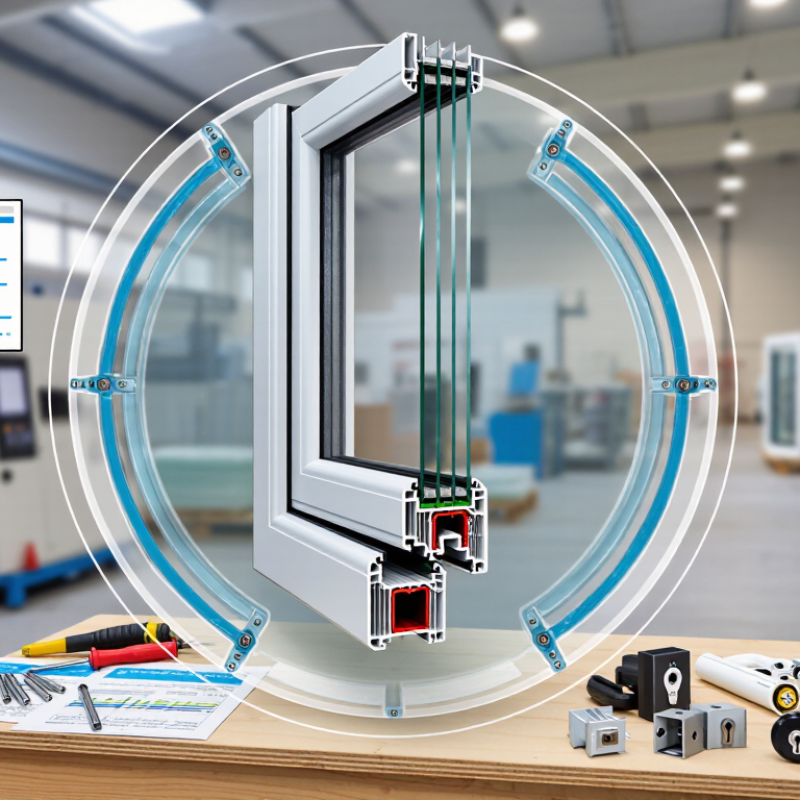
Vinyl windows use rigid PVC frames that resist moisture, corrosion, and routine paintwork. Their hollow, multi-chamber profiles can reduce heat transfer, especially when paired with insulated glass and well-sealed opening parts. Performance still depends on the complete assembly. A strong frame cannot compensate for poorly fitted glass or gaps around the opening.
Their applications vary by climate and building type. In humid coastal areas, vinyl does not rust like some metals, but hardware and seals still need suitable protection. In cold regions, insulated glazing and careful installation help limit drafts and condensation. Hot, sunny locations call for attention to UV resistance, frame color, and heat-related expansion. Small details matter. A dark frame can absorb more heat, so clear product specifications are worth checking.
For global projects, buyers should compare tested thermal and air-leakage data using the same measurement standards. Ask how the window performs at the intended size, not only in a standard sample. Installation also changes results; even a quality unit may leak if the opening is uneven. Vinyl is not ideal for every design or exposure. I would be cautious about choosing by price alone, though price comparisons are rarely simple. The right choice depends on climate, glazing, maintenance expectations, and local construction practices.
China’s vinyl-window industry is best understood as a layered supply chain, not a single factory model. PVC resin and profile producers supply frame materials; glass, seals, steel reinforcement, and hardware come from separate specialists. Fabricators then cut, weld, glaze, and assemble finished windows. Some focus on domestic construction projects, while others handle export orders and custom specifications. This division allows buyers to compare component quality and assembly capability separately. It can also make responsibility less clear when a window performs poorly.
Demand is shaped by insulation needs and building renovation. The Global Alliance for Buildings and Construction’s 2023 Global Status Report states that buildings and construction accounted for 34% of global energy demand and 37% of energy- and process-related carbon dioxide emissions in 2022. These figures describe the global sector, not China’s window market, but they explain why thermal performance matters. In China, manufacturers may differ in profile design, glazing options, testing, and quality-control routines. A polished catalogue is not enough. Factory practices can vary.
Tips: Ask for test reports tied to the exact window configuration, including frame, glass, and seals. Confirm who controls each production stage. A useful question is whether sample specifications match the final shipment; sometimes they do not.
A typical production workflow for export-oriented vinyl windows, from PVC profile production to final inspection and packing.
The values show workflow order only—not market share, factory capacity, or the number of manufacturers. Glass fabrication may be handled in-house or by a supplier.
For global buyers, a factory visit should go beyond polished samples. Check whether production windows match the tested design, including frame dimensions, reinforcement, seals, and drainage paths. The U.S. Department of Energy estimates that window heat gain and loss account for 25–30% of residential heating and cooling energy use. That makes verified thermal performance commercially important, not just a catalog detail.
Ask for recent test reports showing U-factor, solar heat gain coefficient, air leakage, water resistance, and structural performance. Confirm the tested profile, glass, and hardware match your order. A report for a different configuration offers limited assurance. Check that the testing laboratory is accredited and that certificates remain valid for the destination market. Paperwork can mislead. So can one perfect sample.
Factory controls matter just as much. Review incoming-material records, batch traceability, weld consistency, and inspection logs; look closely at corner joints and drainage slots. Ask how defects are handled and how finished units are protected during packing. Request references for comparable climate conditions and shipment volumes, then verify them independently. A sample is not a shipment. Long lead times, changing specifications, or unclear warranty terms deserve direct questions, even when the answers feel uncomfortable.
Notable vinyl window manufacturers in China are best judged by production control, not polished samples alone. Strong suppliers typically manage profile extrusion, steel reinforcement, welding, glazing, and final inspection under one roof. Buyers should request recent test reports for air leakage, water penetration, structural pressure, and thermal performance. Check that the tested configuration matches the quoted window, including glass, hardware, and dimensions. Small differences matter.
Energy performance is a practical screening point. The IEA’s 2023 buildings analysis attributes about 30% of global final energy use and 26% of energy-related emissions to building operations. GlobalABC’s 2023 Buildings and Construction report estimates the sector’s combined share at 37% of global energy-related and process-related emissions. These figures use different scopes. They still explain why buyers should compare whole-window U-values and solar heat gain, not frame claims alone.
For global orders, notable suppliers also provide clear drawings, traceable batch records, and export-ready packaging that protects corners and glass during transit. Ask for production lead times in writing and confirm how replacement parts are handled. A glossy sample is not proof. This comparison is imperfect: factory capacity says little about local installation quality. Buyers should verify destination-market requirements with an independent testing or certification body before placing large orders.
International buyers should treat export compliance as a product-specific check, not a factory-wide promise. Target-market requirements differ, so confirm applicable performance and labeling rules before approving drawings. Ask for test reports matching the exact frame profile, glazing, hardware, and dimensions being ordered. A report for a similar window may not represent your shipment. Small detail, big risk.
During production, inspect more than appearance. Check frame dimensions, welded corners, drainage openings, gasket continuity, and smooth locking action. Open and close sample units several times; a stiff handle can signal alignment problems. Verify glass markings, required safety-glazing documents, and energy data against purchase specifications. Keep batch numbers linked to inspection records.
Before loading, use a written sampling plan and photograph defects, labels, and packaging. Confirm corner protectors, dry storage, and container restraints; long ocean routes can punish weak packing. An independent inspector can verify measurements and review records, but sampling cannot guarantee every unit. A polished showroom sample is not enough. Production can vary, and that deserves honest follow-up.
| Evaluation Area | What to Specify | Quality Checks Before Shipment | Export Standards and Buyer Notes | Records to Request |
|---|---|---|---|---|
| Product configuration | Window type, opening direction, dimensions, frame depth, profile chambers, color, screens, and installation method. | Compare production samples and finished units with approved drawings and the purchase specification. Check overall dimensions, squareness, and visible finish. | Requirements vary by destination and project. Confirm local building-code requirements, design pressures, and permitted product configurations before ordering. | Approved drawings, product specification, color sample, and signed sample approval. |
| uPVC profiles and materials | Profile system, surface finish, material grade, wall-thickness requirements where specified, and any reinforcement details. | Check profile identification, color consistency, surface defects, dimensions, and reinforcement installation where the approved design requires it. | Ask for the applicable product or material test reports and confirm that the tested profile system matches the supplied configuration. | Profile data sheet, material declarations, incoming-inspection records, and applicable test reports. |
| Welded corners and assembly | Corner construction, sash and frame assembly, drainage design, and hardware locations. | Inspect corner joints for cracks, incomplete fusion, excessive flash, or visible gaps. Check sash alignment, smooth operation, and drainage openings. | Acceptance criteria should be agreed in the order specification; appearance alone does not establish structural or weather performance. | Assembly inspection checklist, approved workmanship criteria, and corrective-action records if issues were found. |
| Glazing and safety glass | Glass type, thickness, insulated-glass configuration, coatings, spacer, gas fill if specified, and safety-glazing locations. | Verify glass markings and configuration against the order. Inspect panes for visible damage, contamination, seal defects, and correct orientation of coatings where applicable. | For the United States, safety glazing may be subject to CPSC 16 CFR Part 1201 and applicable building-code rules. Other markets have their own safety-glazing requirements. | Glass configuration schedule, glass certificates or test reports, and insulated-glass production records where applicable. |
| Air leakage | Target performance for the complete window, including frame, sash, weather seals, and operating hardware. | Review test results for the specified size and configuration. Check that weather seals are continuous and that operable sashes close and latch correctly. | Common test references include ASTM E283 in North America and EN 12207 for European classification. Confirm the edition, test specimen, and project-required rating. | Laboratory test report showing specimen details, test method, results, and report date. |
| Water penetration | Required resistance for the project exposure and the relevant test pressure or classification. | Check test reports for water leakage results and verify that drainage paths, weep openings, seals, and glazing details match the tested design. | ASTM E331 is commonly used in North America; EN 12208 provides European water-tightness classification. Test requirements are project- and market-dependent. | Water-penetration test report and a documented comparison between tested and ordered configurations. |
| Wind load and structural performance | Design pressure, window size, support conditions, and any required operating or safety checks. | Confirm that the tested specimen and installation conditions represent the ordered product. Inspect frames, mullions, fasteners, and reinforcement against approved drawings. | ASTM E330/E330M is used for structural performance testing in North America; EN 12210 classifies resistance to wind load in Europe. Do not assume ratings are interchangeable. | Structural test report, approved reinforcement details, and project-specific design calculations when required. |
| Thermal performance | Whole-window U-factor or U-value, solar heat gain or g-value where required, and the calculation or test basis. | Check that reported values apply to the ordered frame, glass, spacer, size, and opening type. Review calculations or test reports from a qualified source. | EN ISO 10077-1 and EN ISO 10077-2 are used for calculating thermal transmittance of windows and frames. Rating methods and required values vary by market. | Thermal calculation or test report, declared performance values, and the referenced method and edition. |
| Hardware and operation | Handle, hinges, locks, restrictors, corrosion protection, and required operating cycles or security features. | Operate each inspected unit through opening, closing, and locking. Check alignment, fastening, smooth movement, and consistency of hardware with the approved schedule. | Security and durability requirements differ by destination and application. Verify any project-specific hardware or forced-entry requirements separately. | Hardware schedule, inspection results, and applicable durability or security test documentation. |
| Finish and visual inspection | Color, texture, acceptable surface condition, visible weld appearance, and allowable cosmetic tolerances. | Inspect units under consistent lighting for scratches, stains, dents, discoloration, glass damage, and inconsistent finish. Use agreed reference samples. | Define cosmetic acceptance criteria before production; sample approval helps reduce disputes but does not replace performance testing. | Approved reference sample, pre-shipment inspection report, and defect-resolution record. |
| Packaging and container loading | Protection method, labeling, unit identification, stacking limits, and handling instructions. | Check corner and glass protection, separation between units, moisture protection where appropriate, carton or crate condition, and loading stability. | Packaging should be suitable for the planned transport route and handling conditions. Confirm shipment dimensions and weight against the booking requirements. | Packing list, packaging photos, loading photos, and final unit count. |
| Export documentation and traceability | Product descriptions, quantities, origin details, shipment terms, and any destination-specific compliance documentation. | Match labels, quantities, model references, and package marks against the approved order and shipping documents. | Typical shipping documents may include a commercial invoice, packing list, and transport document. Import, customs, labeling, and product-compliance requirements depend on the destination. | Commercial invoice, packing list, transport document, origin documentation where applicable, and product-compliance records required by the buyer or destination. |