For global buyers, choosing China’s best energy efficient windows requires more than comparing frame prices. Window performance affects heating, cooling, daylight, comfort, and long-term building emissions. The International Energy Agency reports that building operations consume about 30% of global final energy. Windows remain a practical point for reducing this demand.
Small details matter.
The U.S. Department of Energy notes that windows can represent roughly 25% of residential heating and cooling energy use. Glass coating, spacer design, gas filling, frame insulation, and installation quality all influence the final result. A low U-value may reduce heat transfer, while a suitable solar heat gain coefficient can limit summer overheating. These values must match the project’s climate, orientation, and ventilation strategy.
China has a broad manufacturing base, from standard double-glazed units to certified triple-glazed systems with Low-E coatings. However, factory capability varies widely. Global buyers should review independent test reports, thermal-transmittance data, air-leakage results, and production quality records. Standards such as ISO 10077 and certification systems such as NFRC provide useful comparison points, although they do not replace project-specific verification.
The International Energy Agency and UNEP both emphasize that building efficiency depends on materials, design, and actual operation. That lesson is easy to overlook. The “best” window is not always the most expensive or technically advanced model. It should deliver verified performance, stable supply, compatible hardware, and dependable installation support.
A weakness remains.
Product brochures can simplify complex results. Therefore, this guide examines China’s leading energy efficient windows through measurable performance, supplier credibility, climate suitability, and total ownership value. The goal is practical selection, not exaggerated claims.
What Makes Energy-Efficient Windows Effective in China?
Energy-efficient windows work through several connected features, not one impressive specification. The International Energy Agency reports that buildings use about 30% of global final energy. Windows strongly affect cooling loads, heating demand, daylight, and indoor comfort. In China, effective designs must match local climate zones. Northern cities need stronger insulation. Southern cities often need solar control and moisture resistance.
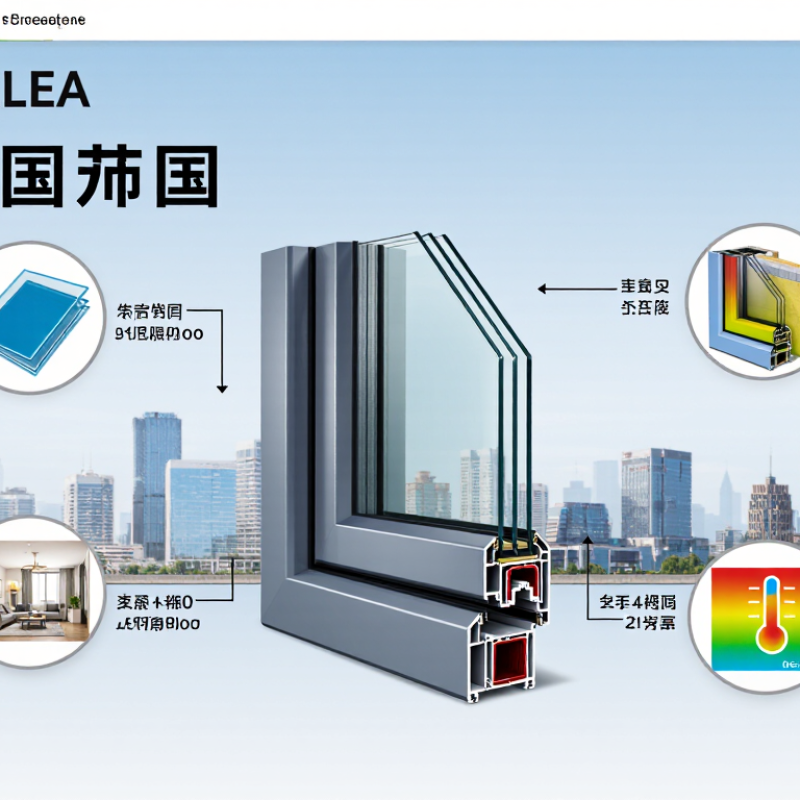
Low-emissivity glass reduces radiant heat transfer. Double or triple glazing creates insulating air spaces. Argon filling can improve thermal performance when the cavity remains sealed. Warm-edge spacers reduce heat loss around the glass perimeter. Thermally broken frames matter too. A low U-value is not enough. Field inspections often find air leakage around the frame, not through the glass. That detail is easy to underestimate. China’s GB/T 8484 standard supports thermal-transmittance testing, while reliable suppliers should provide tested U-values, solar heat-gain data, and airtightness results. The U.S. Department of Energy also notes that windows can influence a major share of residential heating and cooling energy use.
Tips: Select glass by climate, orientation, and room use. Check the whole-window U-value, not only the center-glass figure. Request installation drawings and test reports. Avoid choosing triple glazing automatically; its extra weight, cost, and solar performance may not suit every project. A careful site inspection can reveal gaps that brochures cannot.
China’s Best Energy-Efficient Windows for Global Buyers
Key Window Technologies Used by Chinese Manufacturers
Chinese window manufacturers commonly combine Low-E glass, insulated glazing, and thermally broken frames. Low-E coatings reduce radiant heat transfer while preserving useful daylight. Double glazing suits many climates, but triple glazing performs better in cold regions. It also adds weight, cost, and installation demands.
Aluminum frames often include polyamide thermal barriers between the interior and exterior sections. This design limits heat movement through the frame. uPVC profiles use several internal chambers and reinforced steel sections for stability. Argon-filled cavities can improve insulation, especially with warm-edge spacers. Small details matter here.
A reliable specification should state the U-value, solar heat gain coefficient, air leakage, water resistance, and glass configuration. These figures need independent test reports, not only factory claims. Buyers should request corner samples, coating information, and installation drawings before placing large orders. Factory quality can vary between production lines.
In practical project reviews, installation has often weakened otherwise strong window performance. Uneven openings, poor shimming, or incomplete perimeter sealing create cold drafts and moisture risks. A technically advanced window cannot correct careless fitting. Site conditions also deserve attention. A low U-value may not suit a hot, sunny building without proper solar control. Test the full assembly, not just the glass.
| Window Technology | How It Improves Energy Efficiency | Typical Performance Range or Specification | Best-Fit Climate or Application | Key Buyer Verification Points |
|---|---|---|---|---|
| Low-Emissivity (Low-E) Coated Glass | Reduces long-wave radiant heat transfer while allowing controlled daylight and solar heat transmission. | Double glazing U-value: approximately 1.0–1.6 W/m²·K, depending on cavity, gas fill, coating, frame, and size. | Heating, cooling, and mixed climates; the coating type should be selected according to solar exposure. | Request the coating position, visible transmittance, solar heat gain coefficient, emissivity, and independent test results. |
| Double Insulating Glass Unit (IGU) | Uses two panes separated by a sealed cavity, reducing conductive and convective heat transfer compared with single glazing. | Common cavity: approximately 12–20 mm; argon-filled units generally provide better insulation than air-filled units. | Most residential and commercial projects where a balance of cost, weight, and thermal performance is required. | Check cavity width, sealant system, gas-fill declaration, edge seal quality, and condensation resistance. |
| Triple Insulating Glass Unit | Adds a third pane and another sealed cavity, lowering center-of-glass heat loss and improving interior surface temperature. | Typical center-of-glass U-value: about 0.5–0.8 W/m²·K with Low-E coatings and inert-gas filling; whole-window values are higher. | Cold climates, passive-house-style buildings, high-altitude locations, and projects with strict energy targets. | Confirm total window U-value rather than glass-only performance, as well as unit thickness, weight, hardware capacity, and installation details. |
| Argon-Filled Glass Cavities | Argon has lower thermal conductivity than air, reducing heat transfer through the sealed cavity. | Recommended gas retention: commonly specified at approximately 85% or higher after production, subject to the applicable test method. | Double and triple IGUs in both heating and cooling climates. | Check gas-fill percentage, cavity sealing, gas sampling records, and long-term seal durability; gas performance depends on the integrity of the IGU seal. |
| Thermally Broken Aluminum Frames | Uses a low-conductivity polyamide or similar insulating barrier to interrupt the aluminum heat path from exterior to interior. | Frame performance: varies widely by profile depth, barrier width, reinforcement, and drainage design; whole-window U-value must be calculated. | Modern residential and commercial buildings requiring slim sightlines, durability, and improved thermal performance. | Verify thermal-break material, barrier width, frame U-value, corner construction, water drainage, and thermal-bridge calculations. |
| Multi-Chamber uPVC Frames | Multiple internal chambers increase the path length for heat transfer and reduce frame conductivity. | Typical configuration: five or more chambers are widely used; actual performance depends on frame depth, reinforcement, gaskets, and glazing. | Cold, mixed, and noise-sensitive residential applications where strong thermal insulation is prioritized. | Check profile wall thickness, steel reinforcement, weld quality, UV and weathering resistance, gasket material, and frame classification. |
| Warm-Edge Spacers | Replaces highly conductive metal spacers with lower-conductivity materials, reducing heat loss and condensation risk at the glass edge. | Main benefit: lower edge thermal conductivity than conventional aluminum spacers; the exact improvement depends on frame, glass, spacer geometry, and climate. | Cold climates, high-humidity interiors, large glazed areas, and projects requiring improved condensation resistance. | Identify the spacer material, sealant compatibility, desiccant quality, corner treatment, and condensation-resistance performance. |
| Multi-Point Locking Hardware | Engages the sash at several points, helping maintain uniform gasket compression and limiting uncontrolled air leakage. | Air leakage target: high-performance windows are often designed to meet approximately 0.1–0.3 L/s·m² at 75 Pa, subject to the selected standard and product type. | Windy regions, high-rise buildings, exposed façades, and projects with strict airtightness requirements. | Request air-infiltration test results, gasket compression details, locking-point layout, corner weld quality, and adjustment procedures. |
| EPDM or High-Performance Gaskets | Creates durable weather seals around the glass and opening sash, limiting air and water penetration. | Performance factors: compression set, temperature range, UV resistance, chemical compatibility, and correct installation are more important than gasket appearance alone. | All climates, especially areas with strong sunlight, high humidity, large temperature changes, or coastal exposure. | Verify gasket material, hardness, corner joining method, replaceability, aging resistance, and compatibility with sealants and coatings. |
| Solar-Control Low-E Glass | Reduces unwanted solar heat gain while maintaining selected levels of daylight, helping lower cooling demand. | Typical SHGC: approximately 0.20–0.45 for many solar-control configurations; the correct value depends on orientation, climate, shading, and daylight requirements. | Hot climates, façades with strong solar exposure, curtain-wall systems, and large south-, east-, or west-facing glazing areas. | Compare SHGC, visible light transmittance, exterior reflectance, color, glare risk, and orientation-specific energy calculations. |
| Thermally Improved Installation Joints | Insulated perimeter gaps, air seals, sill pans, and correctly positioned frames reduce thermal bridges and air leakage around the window. | Design principle: the installation should provide continuous air, water, and thermal control layers; window performance cannot be judged independently from installation. | New construction, replacement projects, high-performance buildings, and severe weather zones. | Request installation drawings, anchor spacing, perimeter insulation details, sill drainage, sealant specifications, and site inspection procedures. |
| Low-Conductivity or Insulated Glass Reinforcement | Reduces thermal bridging through structural components that pass through the frame or glazing system. | Application: used where large sizes, high wind loads, or structural requirements would otherwise increase frame heat transfer. | Large sliding doors, oversized windows, high-rise façades, and high-wind locations. | Check structural calculations, reinforcement placement, thermal-bridge modeling, hardware load limits, and deflection control. |
Performance values are representative design ranges rather than guarantees for every product. Whole-window results depend on glazing, frame, dimensions, opening type, hardware, installation, climate, and the test standard used. U-values are expressed in W/m²·K; lower values generally indicate better thermal insulation. SHGC is dimensionless; lower values generally reduce solar heat gain.
Comparing window performance requires more than choosing the lowest U-factor. A lower U-factor means better insulation, but it does not guarantee comfort. The U.S. Department of Energy estimates that windows can cause 25–30% of residential heating and cooling energy use. Source: Energy Saver, “Update or Replace Windows.”
Check whole-window test data, not glass-only figures. Review U-factor, solar heat gain coefficient, visible transmittance, air leakage, and condensation resistance. Lower U-factor reduces heat transfer. A lower SHGC can limit summer heat gain, while a higher value may help in cold climates. Climate matters. Orientation matters too.
Look closely at the frame and installation details. A low-e coating, argon-filled cavity, warm-edge spacer, and insulated frame can improve results. Poor perimeter sealing can still create a cold draft. Small labels mislead. Ask for independent laboratory reports, test standards, sample size, and unit conversions before comparing quotations. European and North American ratings may use different methods.
The International Energy Agency reports that buildings and construction represented about 30% of global final energy consumption in 2022. Source: IEA, Global Status Report for Buildings and Construction 2023. Better windows support wider efficiency goals, but product quality also includes glass durability, drainage, hardware strength, and repeatable factory inspection. A lower number is not always a better purchase. My own caution is simple: performance claims look precise, yet installation conditions can make them less precise in practice.
China Best Energy Efficient Windows for Global Buyers?
Choosing the Right Chinese Window Supplier for Global Projects
Choosing a Chinese window supplier requires more than comparing factory prices. Energy performance depends on glass, spacers, frames, seals, and installation details. Request tested U-values, solar heat gain data, air leakage results, and water resistance reports. Ask which laboratory issued each report and whether testing matches your target market. European, North American, and Middle Eastern projects may follow different performance standards. Do not accept a generic energy-saving claim. Ask for evidence.
During supplier evaluation, inspect production controls rather than polished showroom displays. Check aluminum or uPVC profiles, thermal breaks, hardware quality, and sealant application. Request a sample corner, not only a full window. It reveals joints, drainage paths, gasket compression, and finish consistency. Confirm glass specifications, coating position, spacer type, and tolerances in writing. Factory audits, video inspections, and independent pre-shipment checks can reduce surprises. Still, documents are not enough. Ask how defects are recorded and corrected.
Global delivery also depends on communication and after-sales discipline. A reliable supplier should provide clear drawings, packing photos, production updates, and installation guidance. Discuss container loading, moisture protection, replacement parts, warranty limits, and response times before ordering. Use a contract with measurable acceptance criteria. Small misunderstandings can become expensive on site. Do not overlook local installers. A strong factory may still fail when installation teams lack training or opening sizes are inaccurate. Review the supplier twice. One review is rarely enough.
China’s Best Energy-Efficient Windows for Global Buyers?
Installation quality can determine whether certified windows deliver real savings. The U.S. Department of Energy states that windows may cause 25–30% of residential heating and cooling energy use. Poor sealing can increase that loss.
Field inspections often reveal avoidable problems. Frames must remain plumb, level, and square before fastening. Installers should use compatible tapes, backer rods, and low-expansion foam. Drainage paths must remain open. Small details matter. A beautiful frame cannot correct a twisted opening.
Certification also requires careful comparison. Buyers should request independent test reports showing U-factor, solar heat gain coefficient, visible transmittance, and air leakage. NFRC procedures provide a consistent basis for comparing these values. European projects may require performance evidence under EN 14351-1 and thermal calculations under EN ISO 10077. Requirements vary by destination, so accepting one certificate everywhere is risky. Test reports should identify the exact glass, spacer, frame, dimensions, and test date.
Maintenance planning protects efficiency after installation.
The International Energy Agency reports that building operations represent about 30% of global final energy consumption. Annual checks should include gaskets, drainage holes, hardware, sealant joints, and condensation patterns. Clean drainage channels with a soft brush. Do not paint over moving parts. Coastal projects need more frequent hardware inspections. In practice, maintenance schedules are often too optimistic. Revisions may be necessary after the first winter, especially when wind exposure or indoor humidity differs from the original design.