China Top Window Financing Manufacturers for Global Buyers?
Choosing a reliable Chinese window manufacturer requires more than comparing catalog prices. Global buyers need verified production capacity, consistent quality, and clear communication throughout the project.
The phrase “window financing” can create confusion. It may refer to payment support, project funding, or a search term connected with window manufacturers. Buyers should clarify this meaning before contacting suppliers. A capable manufacturer should explain product costs, payment stages, tooling charges, and shipping responsibilities in writing.
Real experience matters. Review factory photographs, production videos, sample reports, and recent export references. Ask whether the supplier produces aluminum, uPVC, timber, or thermally broken systems. Check glass specifications, hardware brands, drainage details, and surface-treatment options. Small details affect performance.
For example, a coastal project may require corrosion-resistant finishes and laminated glass. A cold-climate building may need low-E glazing and insulated frames. The right supplier should recommend suitable configurations instead of promoting one standard model.
Documentation matters too. Request test reports, material declarations, packing procedures, and relevant market certifications. Confirm whether documents match the actual factory and product series. Some online information may be outdated.
Do not rely on attractive showroom images alone. A pre-production sample can reveal gasket quality, corner joints, handle operation, and color consistency. It may also expose weaknesses early.
This guide compares leading Chinese manufacturers through practical criteria, including engineering support, customization, quality control, delivery reliability, and after-sales communication. Rankings can change. Buyer requirements differ. Careful verification remains essential before placing a deposit or approving mass production.
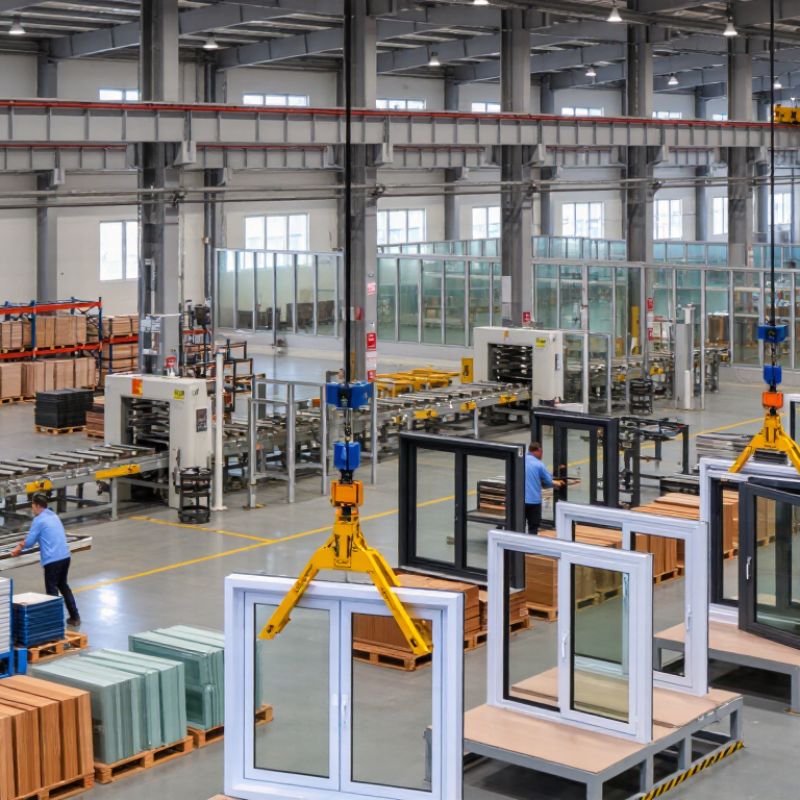
Market Baseline: Buildings Consume 30% of Global Energy (IEA, 2023)
China Top Window Financing Manufacturers for Global Buyers?
Buildings consume about 30% of global energy, according to the IEA’s 2023 assessment. Windows strongly influence heating, cooling, and daylight performance. Poorly specified glass can create hot rooms, cold edges, and higher electricity demand. In warm climates, low solar heat gain may matter most. In colder regions, insulation and airtight frames deserve greater attention.
Global buyers should evaluate window manufacturers through measurable evidence, not catalog images. Request U-value data, solar heat gain figures, air leakage results, and product test reports. Check whether testing follows recognized international standards. Factory audits can reveal details that brochures omit, including spacer quality, sealant storage, and glass handling. Financing terms should also include tooling costs, inspection fees, shipping risks, and replacement procedures.
The uncomfortable truth is that the lowest quotation may become the most expensive option. A cheaper frame can require more heating, cooling, or maintenance over time. Yet energy savings are not automatic. Incorrect installation can undermine excellent products. Buyers should review wall interfaces, drainage paths, and installer training before signing. Some specifications will need revision after climate modeling. That is not failure. It is responsible procurement. A reliable supplier welcomes technical questions, supplies traceable documents, and admits performance limits when conditions change.
Energy Benchmark: U-Values ≤1.0 W/m²K and Solar Heat Gain Performance
Global buyers comparing window financing manufacturers should begin with measured energy performance, not attractive catalog images. A whole-window U-value of 1.0 W/m²K or lower indicates strong resistance to heat transfer. Lower values usually improve winter comfort and reduce heating demand. However, the result depends on glass, frames, spacers, seals, and installation details.
Ask manufacturers for certified test reports, product drawings, and the tested window size. A center-glass value may look impressive but can hide weaker frame performance. Request the complete Uw value instead. Check air leakage, water resistance, and thermal-bridge details. Small gaps around the frame can undermine excellent factory results. They matter.
Solar heat gain performance requires climate-based judgment. A low SHGC can reduce summer overheating in hot, sunny regions. In colder areas, moderate solar gain may provide useful passive warmth. Orientation also changes the decision. South- and west-facing windows often need different specifications. Energy simulation should include local weather, shading, glazing direction, and room use.
Reliable manufacturers explain these trade-offs clearly. They can provide samples, production tolerances, installation guidance, and independent verification. A factory audit may reveal whether spacer alignment and sealant application remain consistent. Yet no document replaces site testing. Specifications can drift between prototypes and mass production. Buyers should review delivered samples before approving large orders. Perfect numbers on paper are not enough.
Compliance Review: EN 14351-1, CE Marking, NFRC Ratings, and ISO 9001
For global buyers, selecting a reliable window manufacturer requires more than comparing prices. EN 14351-1 evidence should match the product type, declared performance, and intended market. Ask for test reports, a Declaration of Performance, and traceable factory records. CE marking may apply under the Construction Products Regulation, but it is not a universal quality certificate. The documents must match the actual window, glass, hardware, and production process.
NFRC ratings
matter when products enter the United States. Review U-factor, solar heat gain coefficient, visible transmittance, and air leakage values carefully. NFRC evaluation is not interchangeable with European compliance. ISO 9001 shows that a quality management system exists, but it does not prove a window meets required thermal, acoustic, or weather-resistance levels. A certificate alone is not enough.
Tips:
Request samples before bulk orders. Compare labels with laboratory reports. Check revision dates and factory addresses. Ask how failed batches are controlled. In practical reviews, small inconsistencies often reveal weak document management. Some suppliers provide polished files but limited production evidence. That should invite questions, not immediate rejection. A useful audit includes incoming material checks, corner-weld inspections, glass traceability, and final packing records. I would also verify whether stated performance covers the complete assembled window, rather than one isolated component. Mistakes still happen, even in organized factories. Clear records make them easier to detect and correct.
Manufacturer Ranking: Quality, Capacity, MOQ, Lead Time, and Export Data
China Top Window Financing Manufacturers for Global Buyers?
A reliable manufacturer ranking should measure more than factory size. It should compare product quality, production capacity, MOQ, lead time, and export data. Quality checks may include profile thickness, hardware durability, glass performance, sealing, and finish consistency. Factory visits and sample testing reveal details that online catalogs often miss.
Capacity matters when projects involve hundreds or thousands of windows. Ask for monthly output, current production schedules, and evidence of similar orders. MOQ affects smaller buyers, especially during project testing. A low MOQ may increase unit costs, while a high MOQ can create unnecessary inventory. Lead time should include production, inspection, packaging, and port preparation. Export data can support credibility, but shipment records alone do not prove stable quality. No ranking is perfect. Data can be incomplete or outdated.
Tips: Request recent samples, a written specification, and a realistic production plan. Confirm whether quoted lead times include custom colors and glass options. Review inspection photos and shipping records before approving a large order. Leave time for corrections; even experienced buyers sometimes underestimate installation problems. A clear warranty process also matters, because small seal or alignment issues may appear months later.
China Top Window Financing Manufacturers for Global Buyers — Manufacturer Ranking: Quality, Capacity, MOQ, Lead Time, and Export Data
| Rank |
Anonymous Manufacturer Profile |
Primary Product Scope |
Quality Score
(100) |
Annual Capacity
(Units) |
Typical MOQ |
Standard Lead Time |
Export Share |
Common Export Markets |
Typical Certifications & Testing |
Best-Fit Buyer Type |
| 1 |
Tier A — Integrated Export Manufacturer
Large-scale production with dedicated engineering and international project support |
Aluminium, uPVC and thermally broken curtain-wall windows; sliding, casement and lift-and-slide systems |
92 |
500,000–1,200,000 |
50–100 units |
35–55 days |
65%–85% |
North America, Europe, Australia, Middle East, Southeast Asia |
ISO 9001; CE-related testing where applicable; air, water and wind-load testing; thermal-performance reports |
Commercial developers, distributors and multi-site construction projects |
| 2 |
Tier A — Project-Capable Specialist
Strong customization capability and stable overseas order management |
Aluminium doors and windows, uPVC windows, folding systems and custom façade packages |
89 |
300,000–800,000 |
30–80 units |
40–60 days |
55%–75% |
Australia, Canada, United Kingdom, Gulf countries, Africa |
ISO 9001; product-specific structural, acoustic and thermal testing; powder-coating and hardware specifications |
General contractors, façade installers and regional importers |
| 3 |
Tier B — Mid-Sized Custom Manufacturer
Flexible product configuration with moderate production scale |
Aluminium casement and sliding windows, uPVC systems, sunrooms and entrance doors |
86 |
150,000–450,000 |
20–50 units |
30–50 days |
40%–65% |
Latin America, Southeast Asia, Middle East, Eastern Europe |
ISO 9001 or equivalent quality controls; glass, sealant and hardware traceability; sample performance testing |
Private-label buyers, small developers and building-material wholesalers |
| 4 |
Tier B — Regional Volume Producer
Competitive pricing and standardized product lines |
Standard aluminium sliding windows, uPVC sliding windows, balcony doors and screens |
82 |
100,000–350,000 |
50–150 units |
25–45 days |
30%–55% |
South Asia, Africa, Central Asia, Middle East |
Factory quality-control procedures; alloy, glass and coating documentation; batch inspection available |
Price-sensitive distributors and standardized housing projects |
| 5 |
Tier C — Small-Batch OEM Workshop
High flexibility but limited capacity and fewer standardized systems |
Custom aluminium windows, decorative doors, replacement units and small architectural orders |
77 |
30,000–150,000 |
10–30 units |
30–60 days |
15%–40% |
Nearby Asian markets, Africa, Middle East and selected European buyers |
Internal inspection; supplier certificates for glass, profiles and hardware; third-party inspection usually available on request |
Custom-home builders, renovation contractors and sample-stage buyers |
|
Data note: The figures above are aggregated industry benchmark ranges for China-based window and façade manufacturers. Capacity refers to approximate annual window or door units; MOQ and lead time vary according to profile system, glass specification, hardware, finish, packaging, tooling and project complexity. Buyers should verify current factory capacity, certifications, test reports, export records and production schedules through documented due diligence before placing an order.
|
Buyer Due Diligence: Testing, Warranty, Incoterms, and Total Cost of Ownership
Choosing a top window manufacturer starts with evidence, not attractive catalog photos. Ask for test reports matching the exact profile, glass, hardware, and size. ASTM E283 measures air leakage, while ASTM E331 evaluates water penetration. For European projects, EN 14351-1 and ISO 12567-1 are useful references. The U.S. Department of Energy reports that windows can cause 25–30% of residential heating and cooling energy use. Small specification errors can become expensive operating losses.
Tips:
Request laboratory reports, sample labels, and calibration dates. Confirm whether testing covered the finished window or only individual components. A warranty should state coverage periods, exclusions, replacement procedures, and labor responsibilities. “Ten years” sounds strong, but it may exclude installation, coastal corrosion, or seal failure. I would also request a written response time for claims. Silence is not protection.
Incoterms define delivery responsibilities, but they do not automatically guarantee safe arrival or product quality. Under Incoterms 2020, buyers should confirm who manages export clearance, insurance, unloading, and import duties. Compare the full landed cost: unit price, packaging, inspection, freight, tariffs, storage, installation, maintenance, and expected energy use. A lower quotation can hide weak packing or costly site adjustments. The International Energy Agency continues to identify building efficiency as a major route to reducing energy demand. Still, projected savings are not guaranteed. Local climate, installation quality, and occupant behavior can change the result. A careful buyer keeps both the test file and the cost model.