Who Are the Top China Home Windows Replacement Suppliers?

Choosing the top China home windows replacement suppliers requires more than comparing catalog prices. A serious evaluation examines factory experience, material quality, testing records, installation support, and export reliability. Aluminum, uPVC, and thermally broken systems perform differently in coastal, cold, and high-humidity climates. The right supplier should explain those differences clearly.

Tom Silva, a veteran general contractor and home-improvement expert, has often emphasized, “A window is only as good as its installation.” That warning matters. Even a well-designed window can leak air or water when the opening is measured poorly. Buyers should request thermal-performance data, air-leakage results, glass specifications, hardware details, and warranty terms. Factory photographs help, but independent certifications and project references provide stronger evidence.

The leading China home windows replacement suppliers are not always the cheapest companies. They usually combine stable production, responsive engineering, custom sizing, secure packaging, and dependable after-sales communication. Some suppliers excel at large commercial orders. Others suit villas, apartments, or small renovation projects. No supplier wins every project. That is the uncomfortable part.

A careful shortlist should compare lead times, minimum order quantities, product tolerances, shipping experience, and installation guidance. It should also test communication before placing a large order. A supplier that answers technical questions vaguely may create expensive problems later. This guide reviews the companies and selection factors that deserve closer attention. It does not pretend that one ranking fits every building, climate, or budget. Truthfully, the final decision still depends on site conditions and installer skill.
Who Are the Top China Home Windows Replacement Suppliers?

China’s Home Window Replacement Market at a Glance

China’s home window replacement market is broad, competitive, and strongly shaped by regional manufacturing clusters. Suppliers in Guangdong often focus on customized residential systems and export-ready production. Jiangsu and Zhejiang manufacturers commonly serve developers, renovation contractors, and overseas distributors. Northern factories may offer stronger solutions for colder climates.

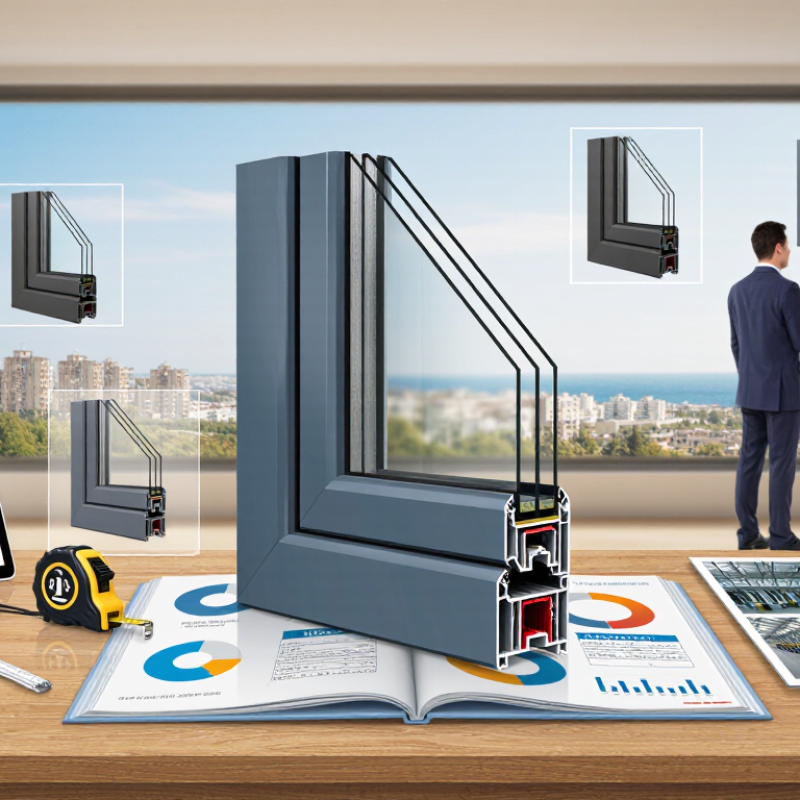
Top suppliers are not always the largest factories. Reliable candidates usually provide detailed section drawings, glass specifications, thermal data, and installation guidance. Ask for a physical corner sample. Check the frame joints, drainage paths, gasket fit, and hardware movement by hand. A useful supplier should explain how the window performs in rain, wind, heat, and repeated opening.

Replacement projects require more than attractive pricing. Accurate site measurements matter, especially around uneven masonry and older openings. Suppliers should confirm the rough opening, reveal depth, glass thickness, color, and delivery protection before production. Request recent project references and independent test documents where available. Warranties deserve careful reading.

Small details often cause large delays. A copied measurement can leave gaps. A perfect factory sample may not match poor installation. Some quotations also exclude screens, trim, unloading, or local taxes. I would compare at least three written offers and record every assumption. The market is capable, but quality still depends on communication, inspection, and the installer’s discipline.

Key Criteria for Evaluating Chinese Window Suppliers

Who Are the Top China Home Windows Replacement Suppliers?

Key Criteria for Evaluating Chinese Window Suppliers

A reliable Chinese window supplier should prove performance, not only display attractive catalogs. The U.S. Department of Energy reports that windows can cause 25%–30% of residential heating and cooling energy use. Therefore, request tested U-factor, solar heat gain coefficient, air leakage, water resistance, and structural performance. These figures should come from laboratories accredited to ISO/IEC 17025.

Check whether the supplier provides independently verified data. The National Fenestration Rating Council explains that U-factor measures heat transfer, while SHGC indicates solar heat entering through glazing. Lower U-factor often supports colder climates. Lower SHGC can help hot, sunny rooms. Local climate matters. A single “best” specification does not exist.

Inspect the factory process in person or through a documented audit. Look at corner joints, drainage holes, spacer alignment, sealant depth, and glass handling. Ask for batch records, production tolerances, replacement-part policies, and a written warranty. Chinese windows should also match applicable GB/T 8478 requirements and the destination market’s building codes.

Do not trust photos alone. A small sample may perform better than a large production order. Request a full-size mock-up with hardware, screens, glazing, and installation details. One practical weakness remains: laboratory results may not reflect poor site installation. I would score installation guidance and after-sales response as heavily as product price. A cheaper quote can become expensive when dimensions, packaging, or replacement parts are unclear.

Leading Types of China-Based Window Replacement Suppliers

Who Are the Top China Home Windows Replacement Suppliers?

China-based window replacement suppliers generally fall into four practical categories: manufacturers, trading companies, project contractors, and custom fabricators. Direct manufacturers usually offer stronger control over aluminum profiles, glass specifications, hardware, and production schedules. They suit buyers ordering repeated sizes or complete residential packages. Custom fabricators are more suitable for unusual openings, heritage-style designs, or strict thermal requirements.

Trading companies can simplify communication. They may combine windows, doors, screens, and installation accessories from several factories. This convenience can increase coordination costs, however. Project contractors provide wider support, including measurement guidance, packing plans, and installation coordination. Their value is clearer for apartments, villas, and renovation projects with many openings. Small custom workshops may offer flexible designs, but their quality systems need closer checking.

A reliable evaluation should include factory videos, sample corners, test reports, and clear drawings. Ask how the supplier handles damaged glass, color variation, and incorrect dimensions. Check whether the stated performance applies to the complete window, not only the glass. Request references from similar climates and building types. A coastal project needs different corrosion protection than a dry inland home. No supplier type is perfect. Low prices can hide weaker seals, limited after-sales support, or inconsistent packaging. I would also inspect one finished sample before approving mass production. That step feels slow, but replacement disputes are slower.

Product Quality, Customization, and Certification Standards

When evaluating China home window replacement suppliers, begin with product quality, not showroom appearance. A smooth frame is only one clue. Ask for air infiltration, water resistance, structural, and thermal test reports for the exact profile and glass combination. Check production dates, batch records, and warranty terms. Experienced buyers also inspect corner welds, drainage holes, gaskets, and hardware alignment. A small gap around a sash can become a winter draft. It is easy to trust a polished sample. That can be a mistake.

Customization should solve site conditions, not merely add decoration. Suppliers may adjust opening sizes, glazing layers, frame colors, mosquito screens, and security hardware. Provide measured drawings and local wind, climate, and installation details. Request a pre-production sample before a full order. Certification needs equal attention. Verify ISO 9001 for quality management, plus market-specific product marks and independent performance reports. These documents must match the factory, model, and materials supplied. Requirements differ by destination. Confirm them with a qualified local professional, because paperwork alone does not guarantee field performance.

Tips: Compare at least three quotations using identical specifications. Ask who controls final inspection. Photograph packed windows before shipment. Keep approved drawings and test reports in one file. Do not ignore installation guidance; even a strong window can fail with poor flashing or uneven fixing. I have found that the cheapest offer often omits small but costly details. Still, a higher price is not automatic proof of quality.

Who Are the Top China Home Windows Replacement Suppliers?

Product quality, customization, and certification are the three core dimensions for evaluating China-based home window replacement suppliers. This non-branded benchmark uses a practical sourcing-weight model rather than ranking individual companies.

Evaluation focus: Product quality receives the highest weighting because thermal performance, air and water resistance, durability, and manufacturing consistency directly affect long-term performance. Customization covers profile materials, glazing, dimensions, colors, hardware, and opening configurations. Certification focuses on documented quality systems and market-compliance evidence relevant to the destination country.

How to Select the Right Supplier for Your Project

Selecting the right China home windows replacement supplier requires more than comparing quoted prices. The U.S. Department of Energy reports that windows can cause 25–30% of residential heating and cooling energy use. Therefore, request tested U-values, solar heat gain coefficients, air leakage rates, and acoustic performance. These figures should match recognized testing standards, not only a supplier’s sales brochure.

Experience matters during project review. Ask for completed projects with similar wall systems, window sizes, climate conditions, and installation methods. Study production photos, sample corners, drainage paths, and hardware operation. A supplier should explain glass configuration, frame reinforcement, sealants, and warranty exclusions clearly. ISO 9001 certification can indicate controlled processes, but it does not guarantee excellent windows. That distinction is easy to miss.

Tips: Request one physical sample and one factory video call. Check whether test reports identify the exact profile, glass, and spacer. Confirm lead times in writing, including packaging and replacement-part support. The International Energy Agency’s Buildings report highlights the importance of improving building energy performance, but the best specification still depends on local weather and installation quality. I have seen attractive quotations fail because installers ignored sill drainage. No checklist is perfect. Leave room for independent inspection, especially before final payment. A reliable supplier welcomes technical questions, admits limitations, and provides measurable evidence instead of vague promises.

Who Are the Top China Home Windows Replacement Suppliers? - How to Select the Right Supplier for Your Project

Supplier Profile Best-Suited Project Common Product Range Customization Capability Typical Production Lead Time Typical Minimum Order Key Verification Documents Main Selection Consideration
Large integrated manufacturer Multi-unit residential developments and large replacement programs Aluminum, uPVC, wood-clad, sliding, casement, awning, tilt-and-turn, and curtain-wall-compatible systems High; can usually support project-specific profiles, colors, glass packages, hardware, and packaging Approximately 30–60 days after approved drawings and deposit Often container-scale or project-based; confirm before quotation Business license, factory audit, test reports, quality plan, and export references Production capacity, engineering support, consistency between batches, and project controls
Mid-sized export manufacturer Residential builders, distributors, and medium-sized renovation projects Insulated aluminum and uPVC windows, doors, sliding systems, and standard replacement configurations Medium to high; suitable for non-standard dimensions and selected finish options Approximately 25–45 days, depending on glass and hardware availability Usually several dozen units or one mixed production order Product drawings, material specifications, inspection records, and previous shipment evidence Balance between price, customization, communication, and delivery reliability
Specialized aluminum window supplier Modern homes, coastal properties, and projects requiring slim sightlines Thermally broken aluminum casement, sliding, folding, lift-and-slide, and large-format systems High for profile depth, thermal breaks, powder-coat finishes, glazing, and hardware combinations Approximately 30–55 days for customized systems Commonly quoted by square meter, project quantity, or production batch Aluminum alloy specification, coating information, thermal-performance data, and structural test results Air and water resistance, wind-load design, thermal performance, and corrosion protection
uPVC replacement window supplier Energy-efficiency upgrades and cost-sensitive residential replacements uPVC casement, tilt-and-turn, sliding, fixed, bay, and combination windows Medium; profile colors, reinforcement, glazing, grids, and hardware can often be specified Approximately 20–40 days for standard configurations Often lower than large aluminum projects; confirm the supplier’s batch policy Profile wall-thickness data, steel-reinforcement details, glazing specification, and weather-performance reports Profile quality, reinforcement, seal design, UV resistance, and long-term dimensional stability
Custom wood or wood-clad window supplier Premium renovations, heritage-style homes, and architect-designed projects Timber casement, tilt-and-turn, fixed, French, and wood-aluminum composite windows Very high; supports species, stains, paint colors, muntins, glazing bars, and custom profiles Approximately 45–90 days, depending on timber finishing and glazing Usually project-specific rather than catalog-based Timber moisture data, coating system, joinery details, glazing specification, and sample approval records Moisture control, finish durability, joint quality, maintenance requirements, and dimensional accuracy
Trading and project-sourcing supplier Small mixed orders requiring multiple product categories from different factories Mixed aluminum, uPVC, doors, screens, hardware, and accessories Dependent on partner factories; customization may be broad but less directly controlled Approximately 35–70 days, including coordination and consolidation Often flexible, but product-specific minimums may still apply Supplier authorization, factory identity, inspection agreement, commercial invoice, and product test reports Transparency about manufacturing sources, quality responsibility, and after-sales support
Practical evaluation note: Lead times, minimum order quantities, prices, and available certifications vary by design, glass specification, hardware, destination market, and order volume. Request approved shop drawings, a complete bill of materials, performance test reports, a physical sample, and a pre-shipment inspection before placing the final order.